
Subscription commerce · Decision guide
Subbly vs Shopify: Choose by the Store You’re Building
Choose between Subbly and Shopify by catalog breadth, subscription workflow, current plan limits, and the full payment stack.
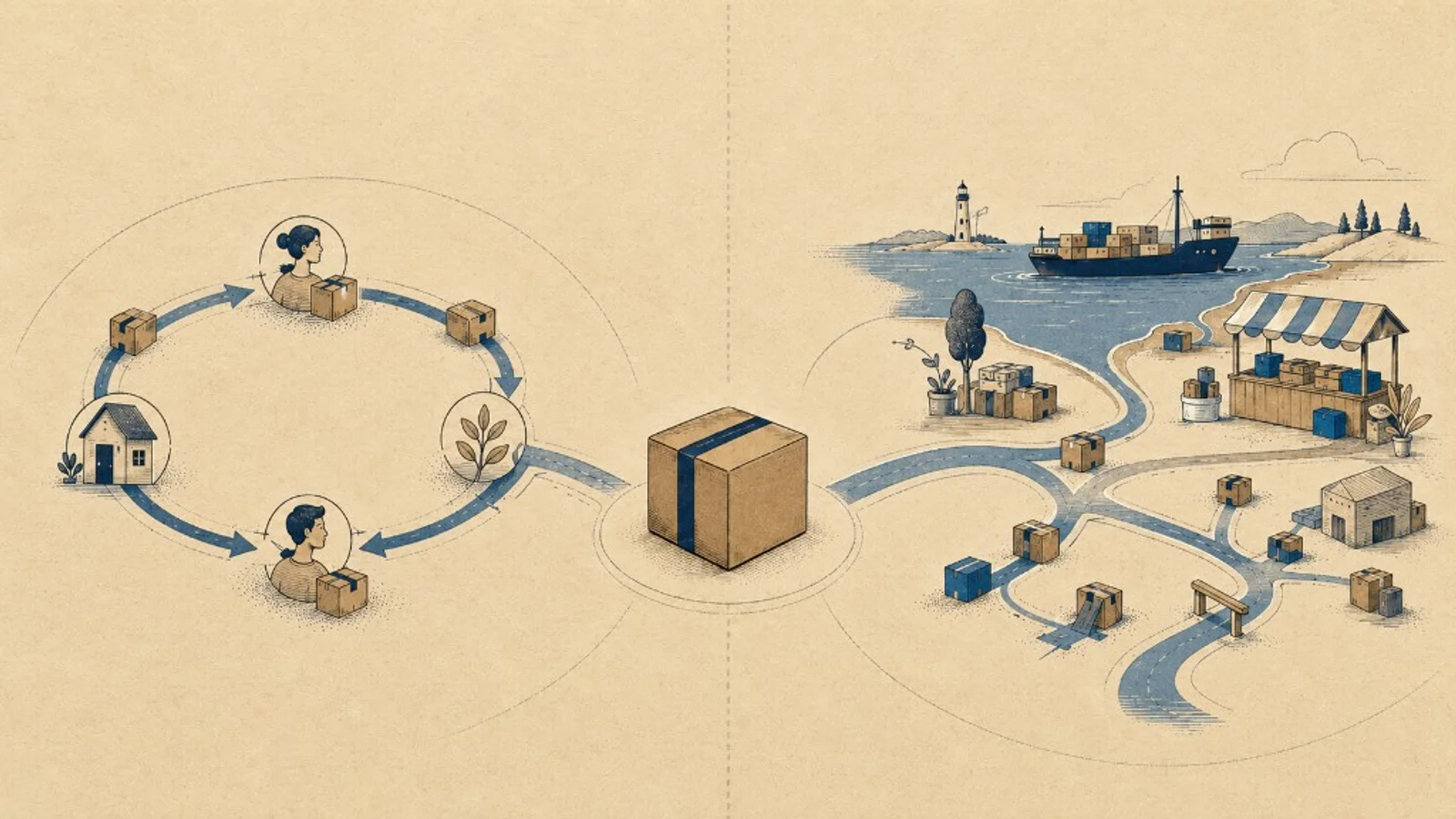
A twelve-SKU box that renews every month is not the same store as a 500-product catalog with one subscribe-and-save line. Both can run recurring orders. They should not inherit the same operating system.
Subbly puts the recurring cycle at the center. Shopify starts with the broader store. The better choice depends on what else the catalog must carry and which subscription workflow cannot bend.
Start with the catalog, not the checkout
A subscription-only catalog creates a different operating problem from a broad store that happens to offer replenishment. The first needs recurring billing, changing box contents, customer self-service, and repeat-shipment workflows at the center. The second needs subscriptions to coexist with one-time products, a larger catalog, retail channels, and a wider set of integrations.
Subbly describes its product as an all-in-one, subscription-first commerce platform that also supports transactional commerce. That makes it a natural starting point when nearly every customer relationship follows a recurring cycle.
Shopify’s center of gravity is broader. Shopify’s Basic plan includes a full online store, unlimited products, and casual in-person sales. A candle company selling a monthly discovery box, individual candles, wholesale packs, and weekend-market inventory is asking Shopify’s kind of question.
The number of recurring products is not the useful dividing line. Catalog breadth is.
The base prices are closer than old comparisons suggest
These prices were retrieved from the vendors’ official pages on August 14, 2026.
Subbly lists Basic at $39 per month, Subbly at $79 per month, and Advanced at $159 per month; annual billing displays monthly equivalents of $29, $59, and $119.
Shopify lists Basic at $39 per month or $29 per month when paid yearly, Grow at $105 or $79, and Advanced at $399 or $299.
The entry prices therefore match on the published monthly and annual-billing figures. The cost difference starts after the plan name.
| Decision point | Subbly Basic | Shopify Basic |
|---|---|---|
| Monthly price | $39 | $39 |
| Annual-billing monthly equivalent | $29 | $29 |
| Entry-plan catalog | 20 SKUs | Unlimited products |
| Recurring sales | Core platform focus | Free first-party app |
| Operating center | Subscription-first | General commerce |
Subbly Basic
- Monthly price
- $39
- Annual-billing monthly equivalent
- $29
- Entry-plan catalog
- 20 SKUs
- Recurring sales
- Core platform focus
- Operating center
- Subscription-first
Shopify Basic
- Monthly price
- $39
- Annual-billing monthly equivalent
- $29
- Entry-plan catalog
- Unlimited products
- Recurring sales
- Free first-party app
- Operating center
- General commerce
The table is not a total-cost calculation. Payment fees, catalog limits, app choices, and the higher plan needed for a particular workflow can change the result.
Shopify now has a free first-party subscriptions app
A comparison that says Shopify always requires a paid third-party subscription app is stale.
Shopify offers a free first-party Shopify Subscriptions app for recurring product sales. Shopify Subscriptions supports weekly, monthly, or yearly auto-billing, multiple plans and discount types, customer pause or skip controls, and subscription analytics.
That closes part of the old gap. A small store can add straightforward subscribe-and-save plans without immediately paying a separate app vendor.
It does not make every subscription stack equivalent. A merchant that needs build-a-box logic, unusual billing and shipping cadences, detailed retention workflows, or a particular migration path still has to check whether the first-party app covers that exact operation. If it does not, the Shopify decision becomes “Shopify plus which app?” rather than Shopify alone.
Choose Subbly for a subscription-first operation
Subbly is the stronger default when recurring orders define the operation and the catalog can remain within the limits of the selected Subbly plan.
The second half of that sentence matters. Subbly’s Basic plan lists a 20-SKU inventory limit, five automation rules, one seat, and two languages. Subbly places custom checkout and a 100-SKU inventory limit on its $79 monthly plan, while customizable bundles and API access appear on Advanced at $159 monthly.
A founder with twelve rotating boxes and no retail channel may fit Basic. A build-a-box catalog with dozens of components can cross a plan boundary before revenue does. Price the required workflow, not the cheapest card on the pricing page.
Subbly also adds its own transaction layer. Subbly’s help center lists a 1% Subbly transaction fee on Basic, Subbly, and Advanced for Stripe transactions, in addition to the payment processor’s own fee.
That fee does not automatically make Subbly more expensive. A purpose-built workflow can replace other software and operational work. But the percentage belongs in the margin model from the first order, not as a surprise after launch.
Choose Shopify for a broader commerce system
Shopify is the stronger default when subscriptions sit inside a broader store with a large catalog, one-time products, or in-person sales.
Unlimited products on Basic remove one early catalog constraint. The same store can sell a monthly box, individual replacements, seasonal bundles, and products at a pop-up without treating the subscription program as the entire business.
Payment cost still needs a precise scenario. Shopify lists a 2.9% plus 30-cent online standard card rate on Basic with Shopify Payments and a 2% third-party transaction fee when an external payment provider is used.
Those numbers are not directly comparable with Subbly’s 1% platform fee. Shopify’s 2.9% plus 30 cents is card processing; Subbly’s documented 1% sits on top of processor fees. Compare one complete payment path on each platform using the same order value, gateway, and country.
Shopify becomes less automatic when the subscription workflow is specialized. The free first-party app handles a real set of recurring-sales jobs. When the operation exceeds those boundaries, the next decision is whether to add another app. Each addition brings another contract, configuration surface, and source of changing terms.
Calculate the cost of the actual stack
Take one representative month and write down:
- The base commerce plan required by the catalog.
- The subscription feature or app required by the billing model.
- Platform transaction fees.
- Payment-processing fees.
- Any bundle, automation, migration, or API requirement that forces a higher tier.
- Staff time spent reconciling tools that do not share one operating model.
Use the same order count, average order value, and payment method for both sides. Do not add projected revenue or lower churn unless there is evidence from the business itself. Software features are inputs; they are not outcomes.
One more boundary is important. This comparison does not establish which platform converts better, retains subscribers longer, or delivers more reliably. Choice Harbor has not run a controlled store test on either platform. Those claims would need a documented test, not a feature table.
The decision
Choose Subbly when the business is subscription-first, the required catalog fits its plan limits, and keeping recurring operations inside one purpose-built system is worth the additional transaction layer.
Choose Shopify when subscriptions are one part of a wider commerce business and the store needs catalog breadth, one-time sales, or in-person selling. Start by testing the free first-party subscription app against the exact billing workflow before adding a paid alternative.
If the store already runs on Shopify, this page is not the final decision. Compare subscription apps and migration constraints without pretending a platform move is free. If the operation needs custom enterprise checkout or unusual payment portability, commission a technical audit before either contract.